Privacy
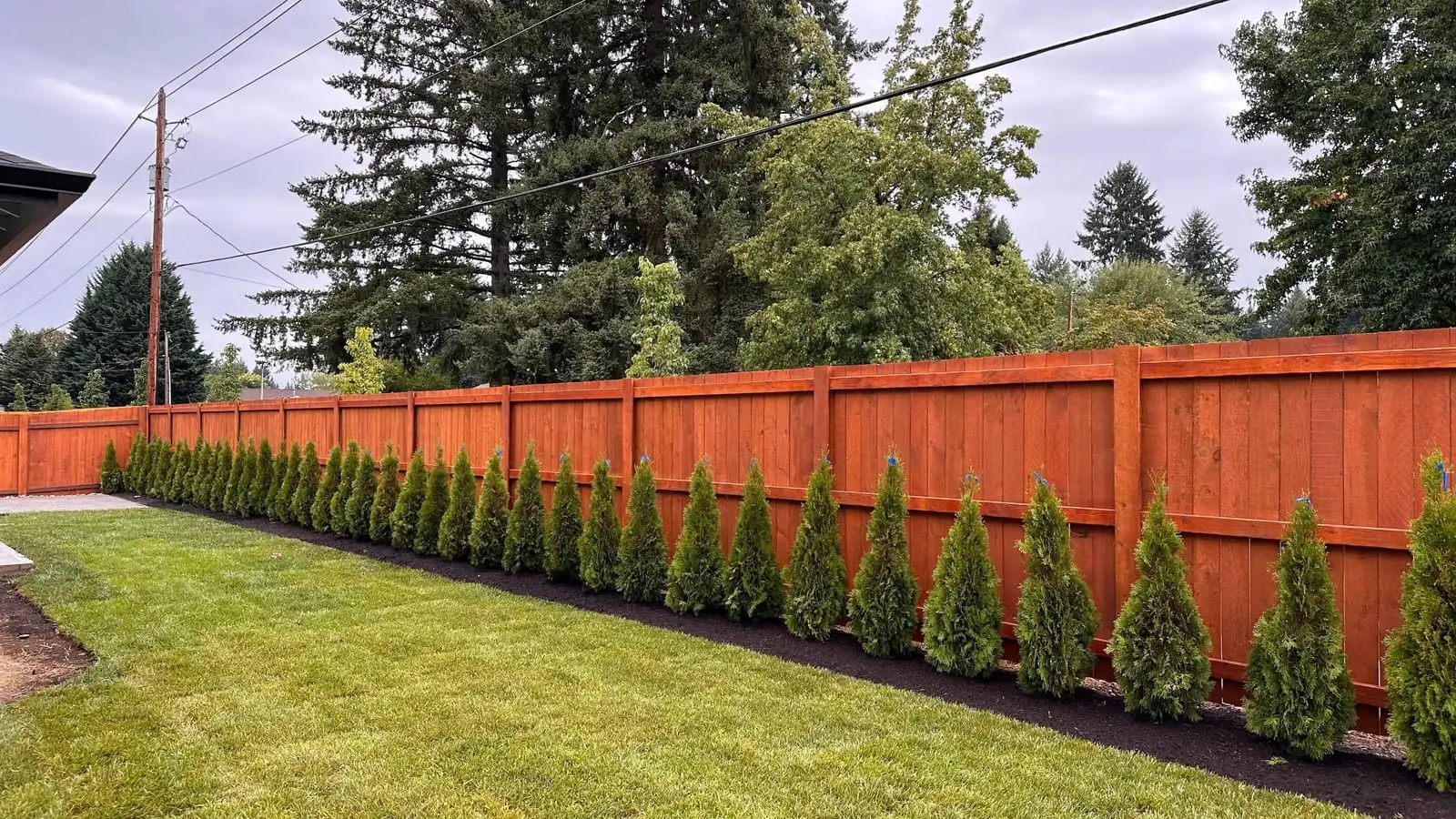
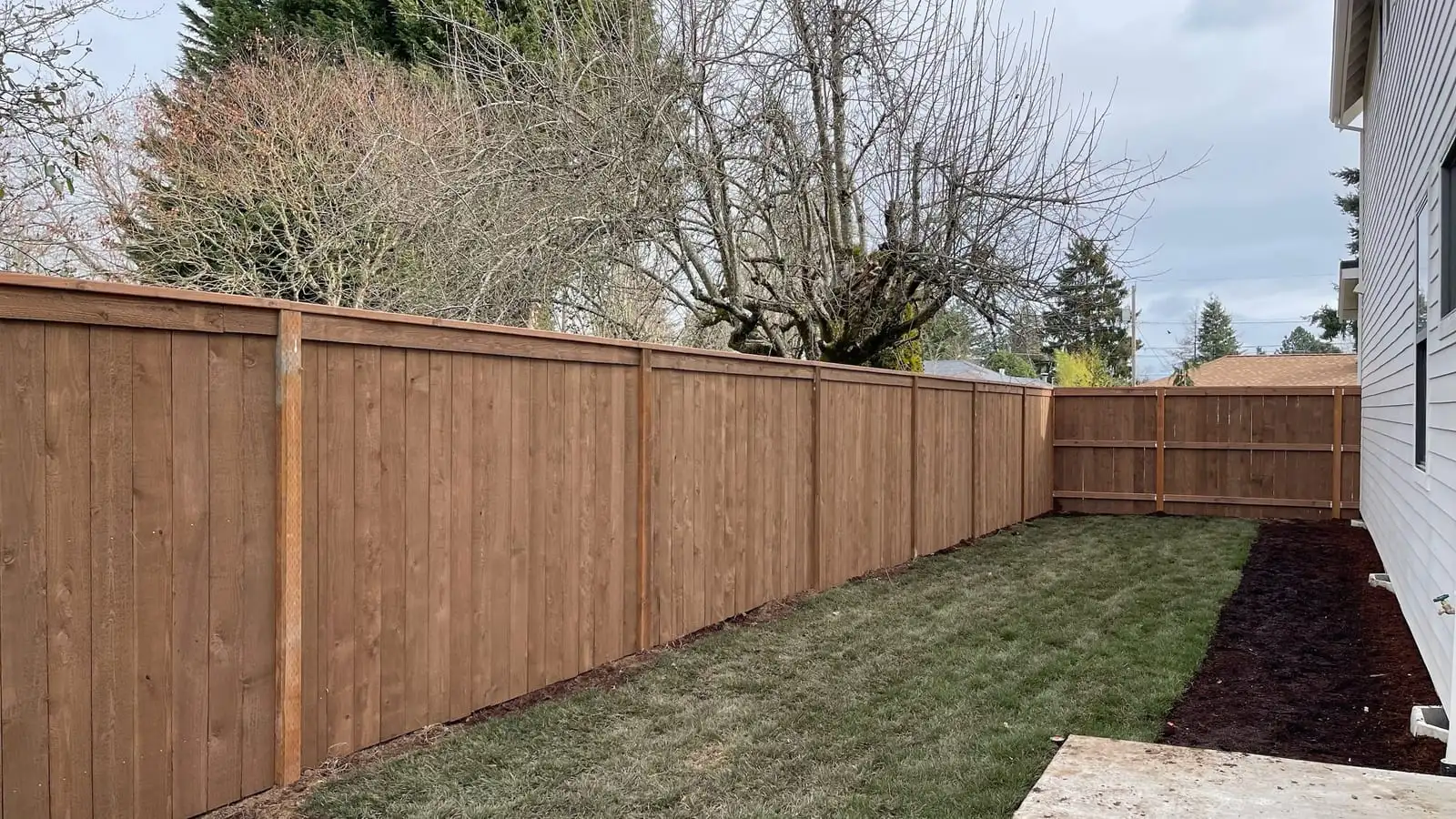
Solid cedar boards, stained or left to weather. Several Vancouver and Portland photos are this style, including new fences around sod and concrete patios.

Fence materials
Western red cedar is the fence we build most often. It is naturally rot-resistant, the grain shows, and it weathers in a wet climate instead of falling apart the first winter. Our fence page lists a 15–25 year lifespan for cedar.
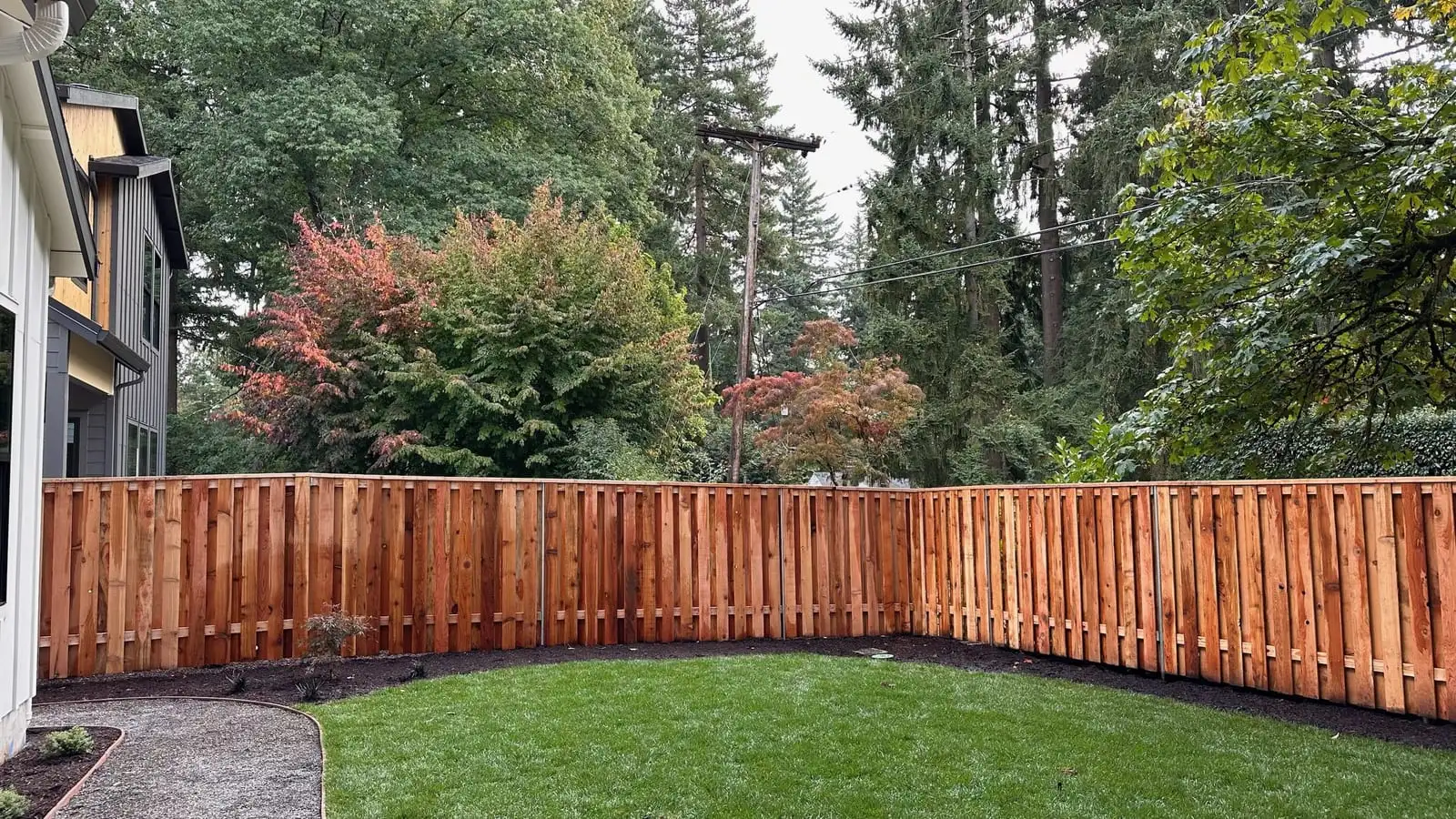
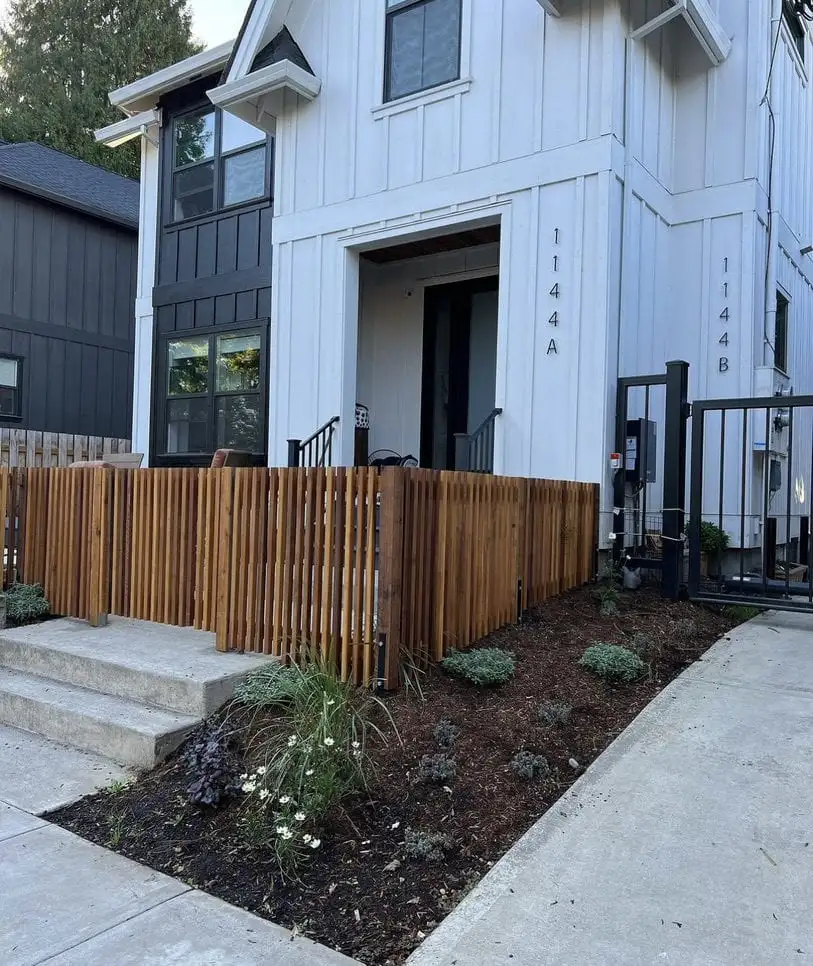
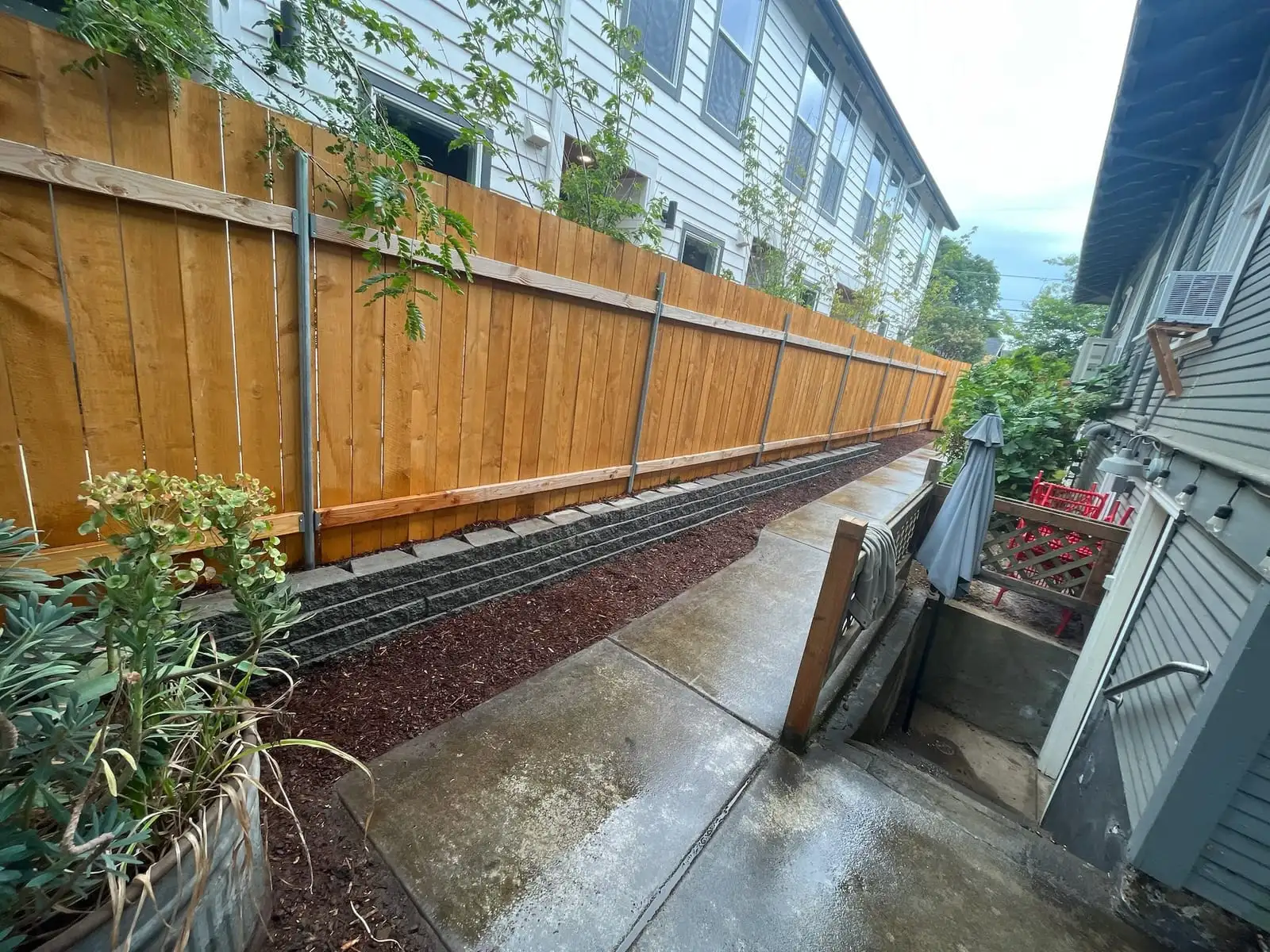
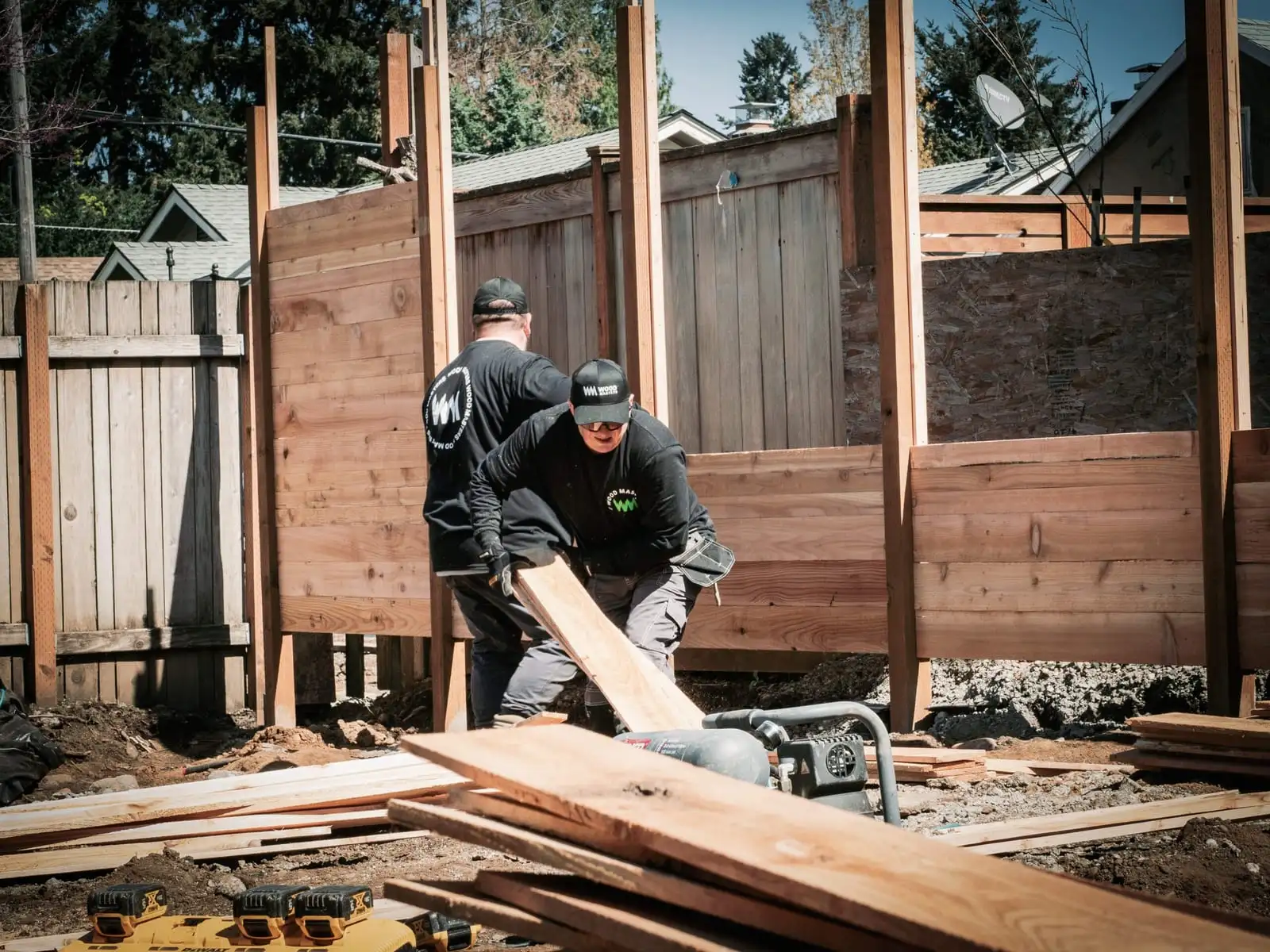
The project photos are cedar in several builds: tall privacy, shadowbox around a curved lawn, horizontal boards, a lattice top, stepped panels between townhomes, fences sitting on block retaining walls, and a wood double driveway gate with a black steel frame in Portland.
Solid cedar boards, stained or left to weather. Several Vancouver and Portland photos are this style, including new fences around sod and concrete patios.
Shadowbox reads the same from both sides of the line. Horizontal cedar is the flatter, modern board layout, including runs next to the house.
Stepped panels follow grade between homes. Where a block retaining wall is already there, the fence can sit on the wall instead of in the soil below it.
Walk gates are part of a normal run. We also build wood driveway gates on a steel frame, as in the Portland double-gate photo.
Cedar can be stained or sealed. Left alone, it silvers. Cracks, checking, and color change are normal for cedar and are called out as exclusions on our warranty page.
A cracked cedar post that is still structurally sound is not treated as a defect. The warranty page explains that review.
No. Cedar is the naturally durable board. Pressure-treated wood is the lower-cost treated option, also listed on the fence page, and it is meant to be painted or stained.
Yes. Job photos show cedar next to arborvitae, Japanese maples, and fresh bark beds. Planting is part of the landscaping work, not a separate fence product.
Honest pricing and a crew led by the owner. No deposit required to get started.